




Milano Design Week 2026
April 20 – 26
by the continue. Co., Ltd.
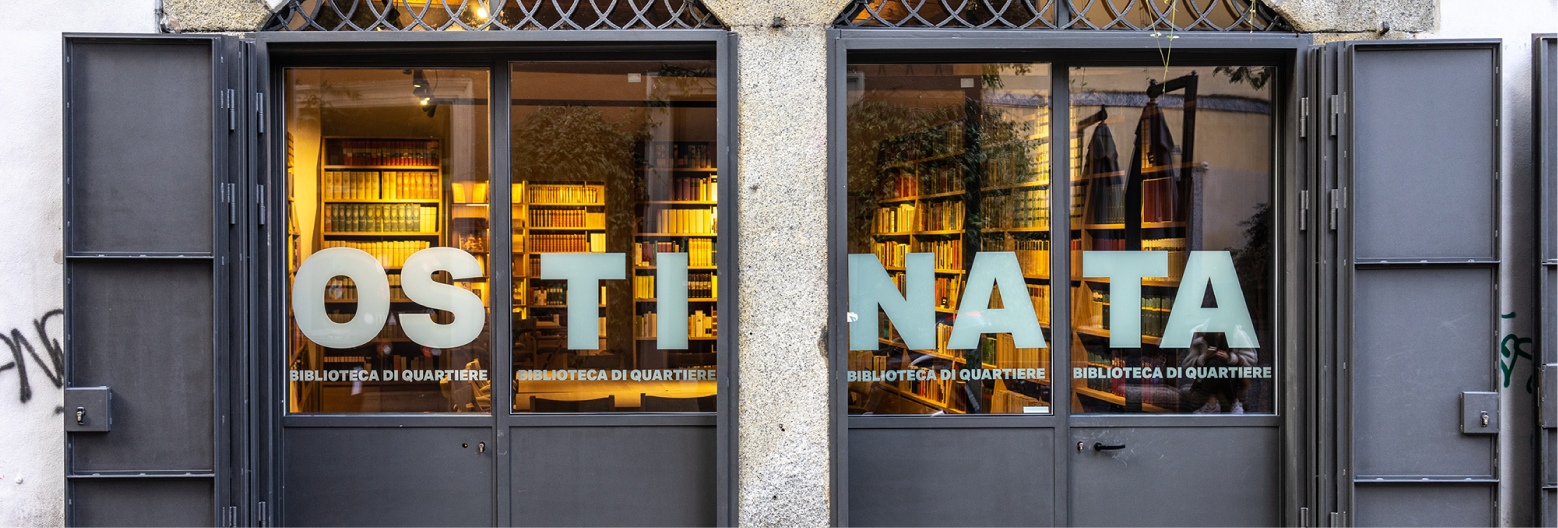
at Biblioteca OSTINATA
Via Osti 6, 20121 Milano Quartiere Missori



EARTH, MEMORIES IN PERPETUITY.
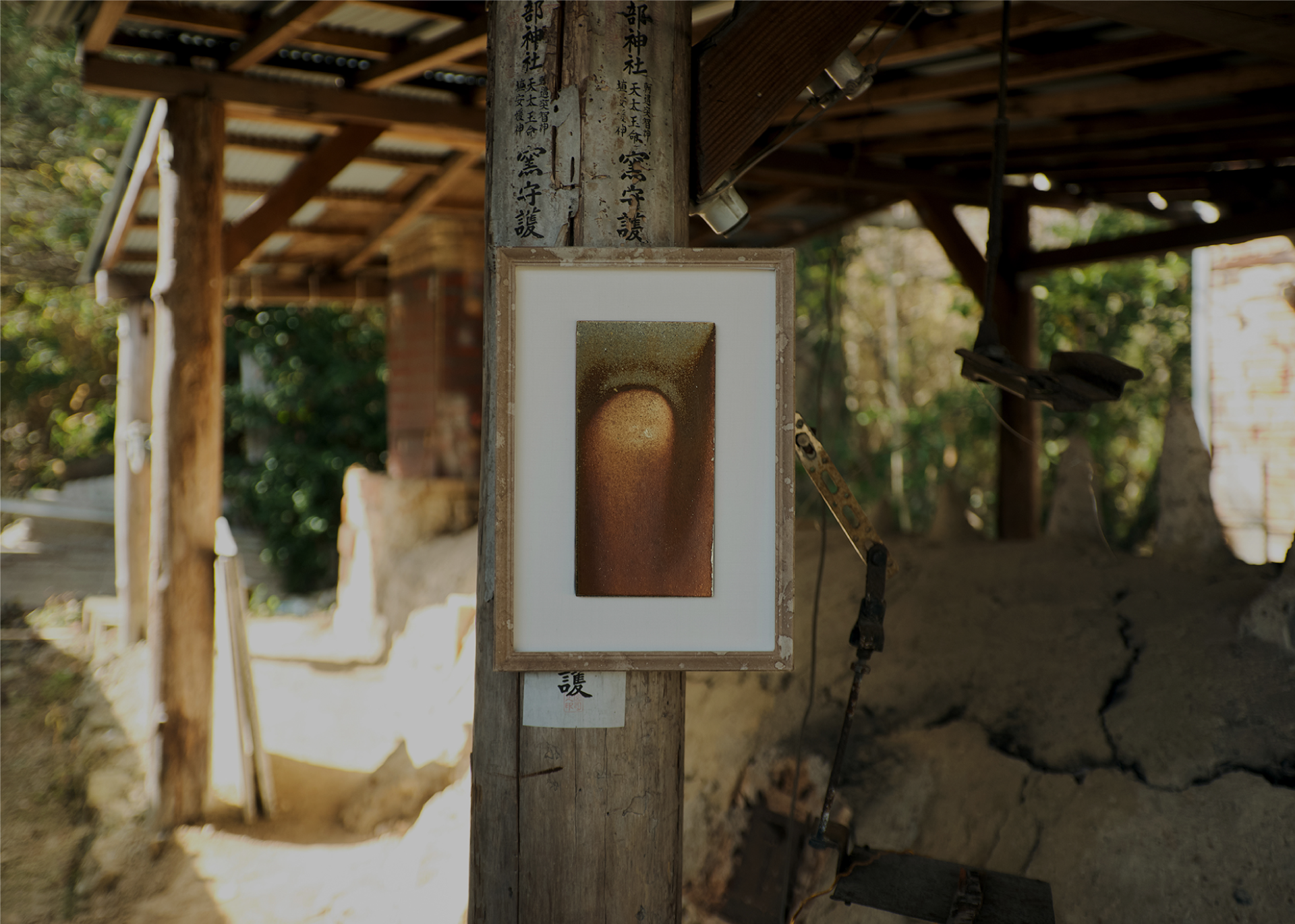
The kiln is where an irreversible transformation takes place–where clay is extracted from the natural order of things to be captured in time as a work of Bizen-yaki ceramics, within it inscribed a record of the earth’s journey through fire and time.
Derived from the Latin mono (one, unique) and solum (earth, soil), MONO-SOLUM is the title of a line of ceramic artworks that lays bear the “earth’s memories” through the restoration of residual shards of Bizen-yaki pottery, a traditional art form developed in Okayama, Japan.
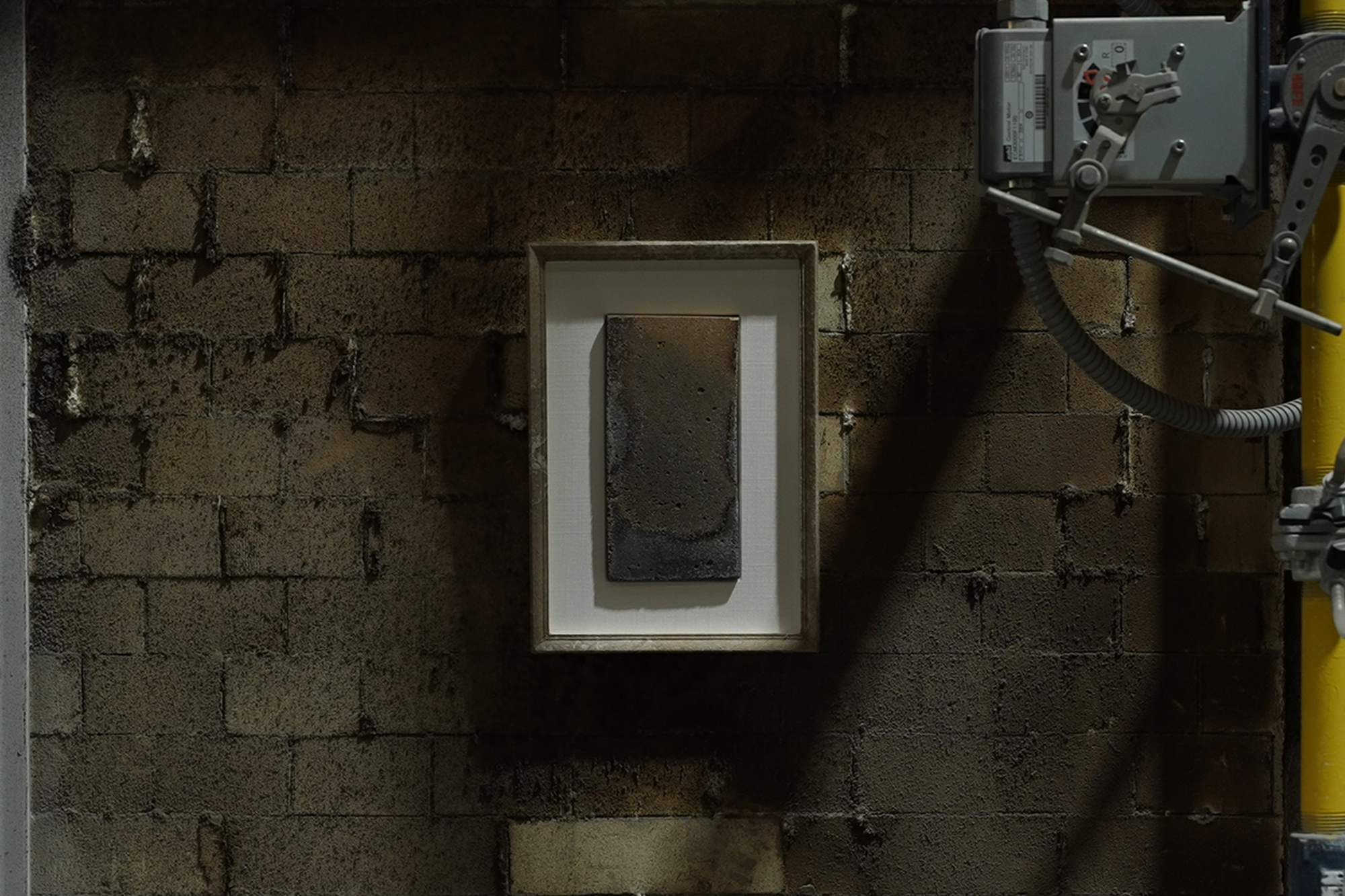
Skilled kamabito (“masters of the kiln”) fire clay dating back to the Cretaceous period, the key component of the artform. The trajectory of thousands of years of history packed into the clay is expressed in an entirely new way with each kiln-firing. In this body of work, ceramic shards that have already undergone a first firing are returned to the kiln, where the clay itself expresses yōhen (kiln transformation) anew. In doing so, a fleeting moment in which past, present, and future overlap is sealed serenely within a frame.


Library of the Soil
The exhibition venue, Biblioteca Ostinata, is a space open to citizens of Milan, dedicated to the accumulation, interpretation, and dissemination of knowledge.
Within its walls, the architecture of Michele De Lucchi serves as a backdrop for the intermingling of the earth inhibiting the Bizen works and the repositories of crystalized knowledge nestled in the surrounding bookshelves, creating a dialogue that invites us to inspect the passages of time inscribed in clay. Fragments (past), contemporary art (present), restored Bizen (future).
Each temporal element converges in this library of clay, where an accumulation of artistry and craftsmanship softly sets the stage for the future of Bizen-yaki, and by extension, the future itself.
土の図書館

MONO-SOLUM —Tracing the Lineage of Reclaimed Bizen-Yaki —
Date: Monday, April 20 – Sunday, April 26, 2026
Time: 10:00-18:30
Venue: Biblioteca Ostinata / Via Osti 6, 20122 Milan, Italy
Web site:https://the-continue.com/en/mono-solum/
Related events:BY INVITATION ONLY
Apr 23, 16:00–17:30 [Talk Session]
Apr 23, 18:00–19:30 [Reception Party]
Organizer: the continue. Co., Ltd.
Creative Direction: Yusuke TAGUCHI (YUSUKE TAGUCHI DESIGN)
Participating Artists (Kamabito):
Sō ISEZAKI, Hiroshi TOYOFUKU, Takushi TAKAHARA, Toshihide ŌAE
Framing: Mayo YOSHIDA (kuroganeFrame)
Interior Design and Installation Support: In Fieri srl, Alessandra Scarfò Design
Fragrance Direction: Rika TERASAWA (limetta.)
Supported by: Biblioteca OSTINATA, KOGEI Collaboration Kitamae-bune, Naoyoshi Itani (TSUNAGITE inc.), Ekaterina De Andreis
(EKADEA studio) , fujieu
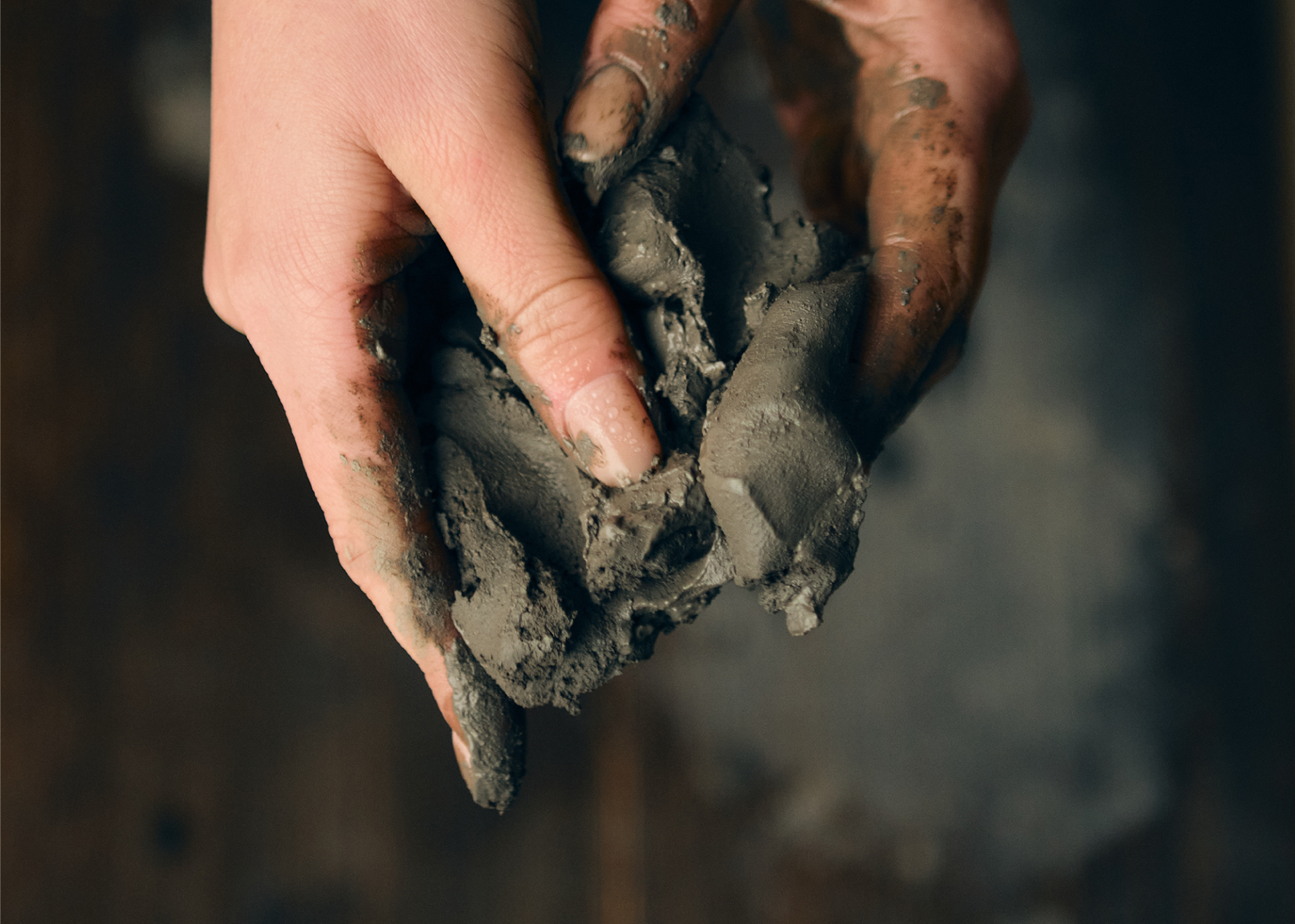
土 EARTH Ceaseless is the earth.
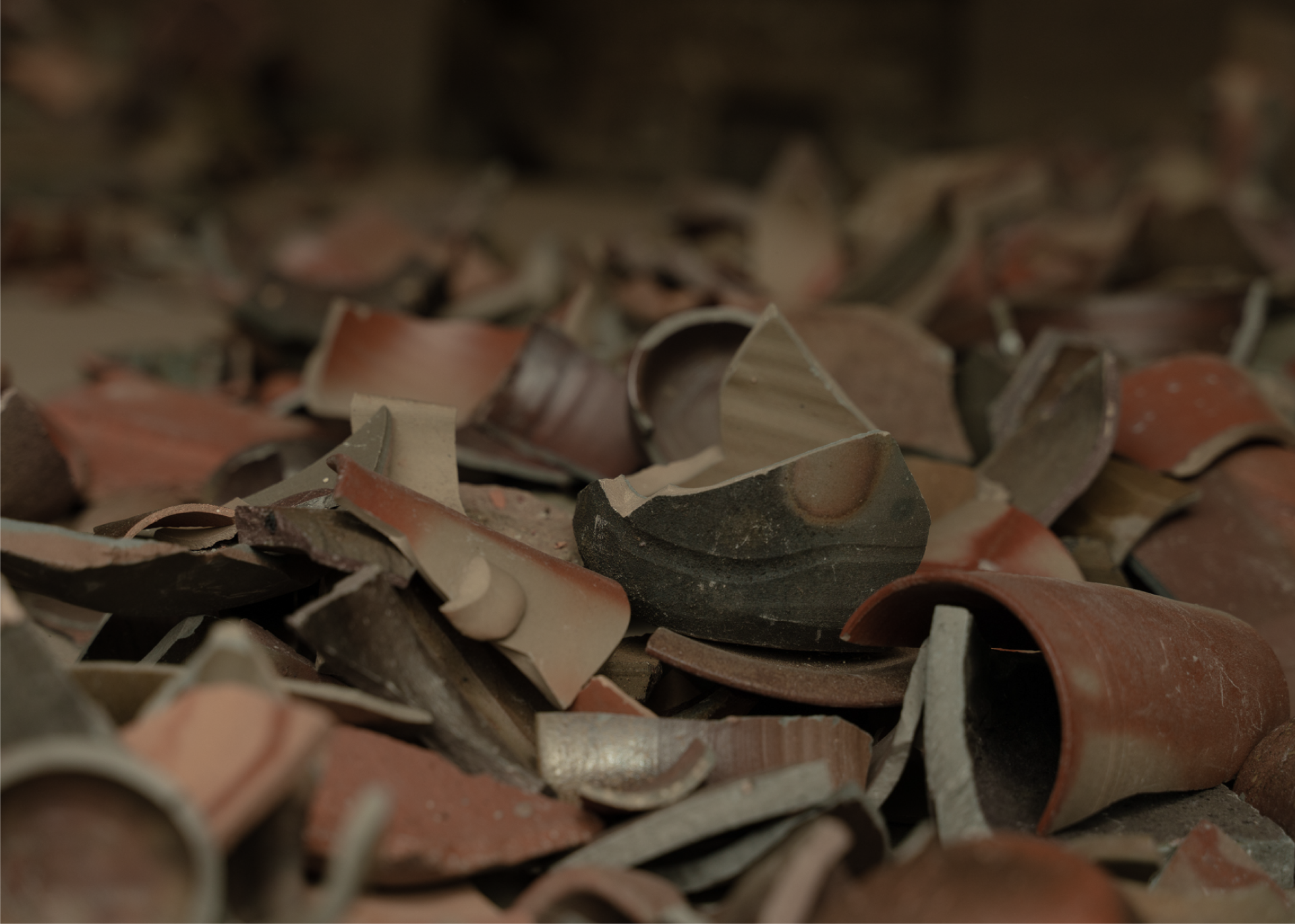
断片 FRAGMENTS That which once held a form, belonging to someone

火 FIRE Vehicle for encounter
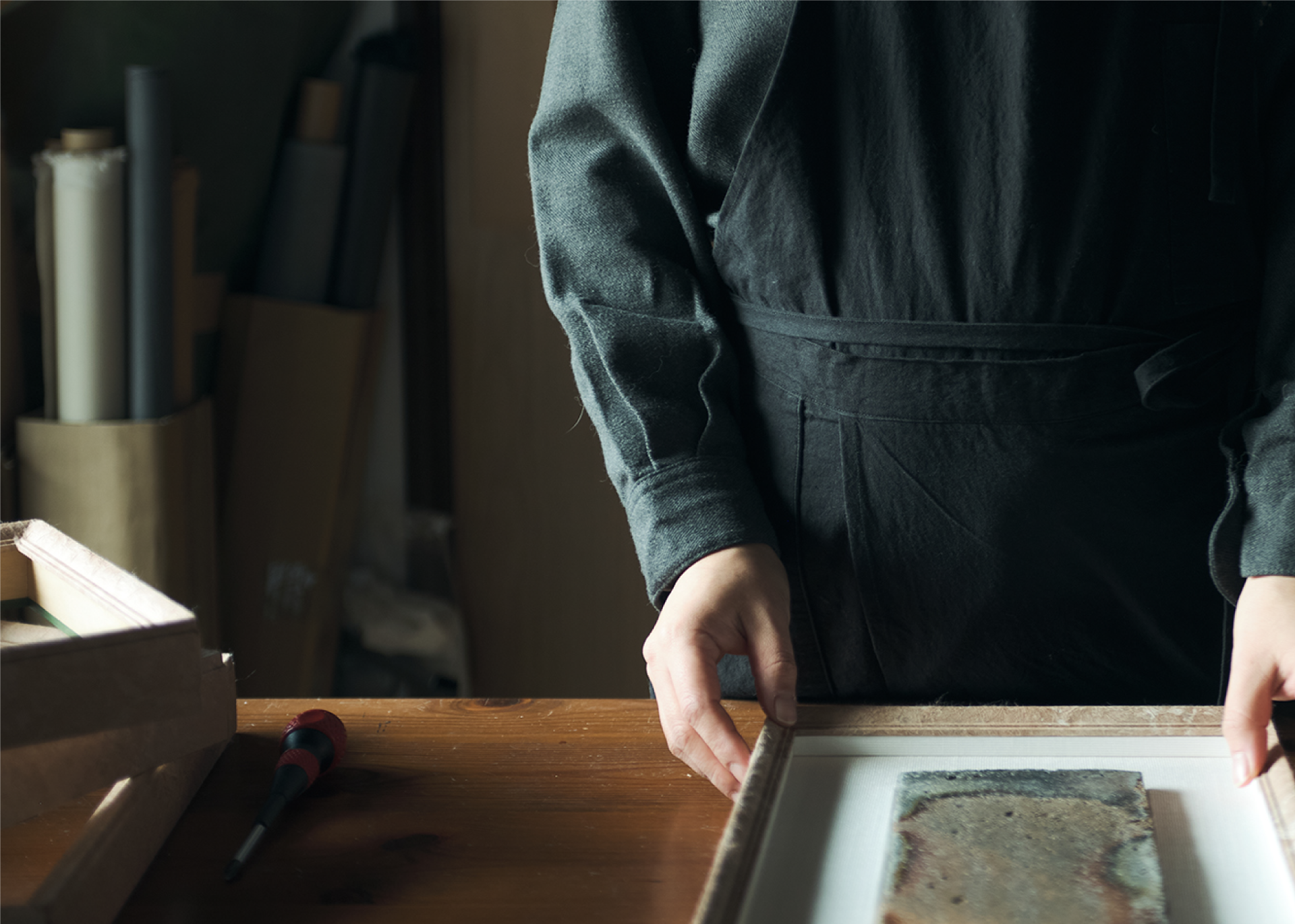
封印 SEAL Where matter ends, memory begins.
Traced back and molded anew.
This is art informed by recollection–a resuscitation of primordial wisdom stored within the earth, born once more.
A thousands-year slumber disrupted by the flame of the kiln’s keeper unleashes the echoes of Cretaceous period clay.
The result is the advent of an unprecedented visage seemingly materialized by the earth’s own tacit accord.
MONO-SOLUM
—from the Latin mono (one) and solum (soil, earth)
The bizen-yaki clay’s chronicle is conveyed without a word.
Liminal fragments interposed between past and present bring about a decided quietude and depth to their surroundings, and their timeless story, while unspoken, resonates with those who would behold them.
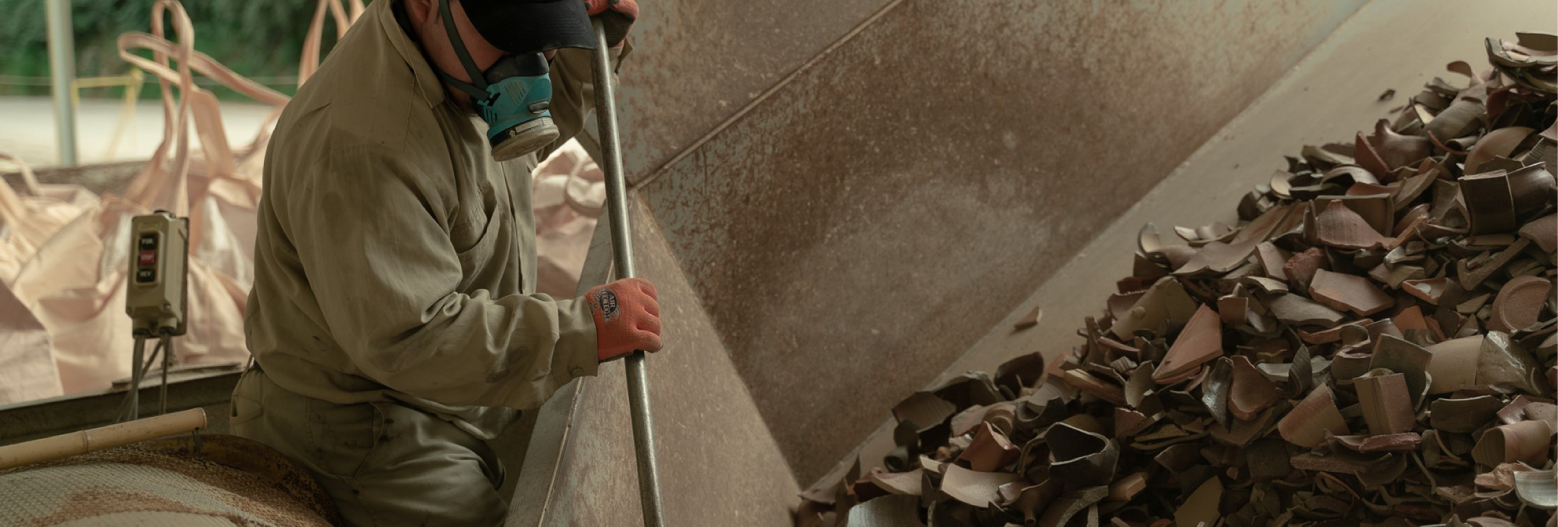
MONO-SOLUM contains material derived from broken ceramic fragments — shards that once belonged to unfinished works in the hands of Bizen potters, now returned to the earth and reborn as clay.
Having already passed through fire once,
this soil holds a more complex texture,
a deeper memory —
a ground that carries the silent weight of a thousand years.
Though its form may change with every transformation,
the genealogy of Bizen endures.
Reborn as a new expression that connects past and future,
this work traces back to its own origins,
as if remembering the place from which it once came.
窯びと
Masters of the Kiln
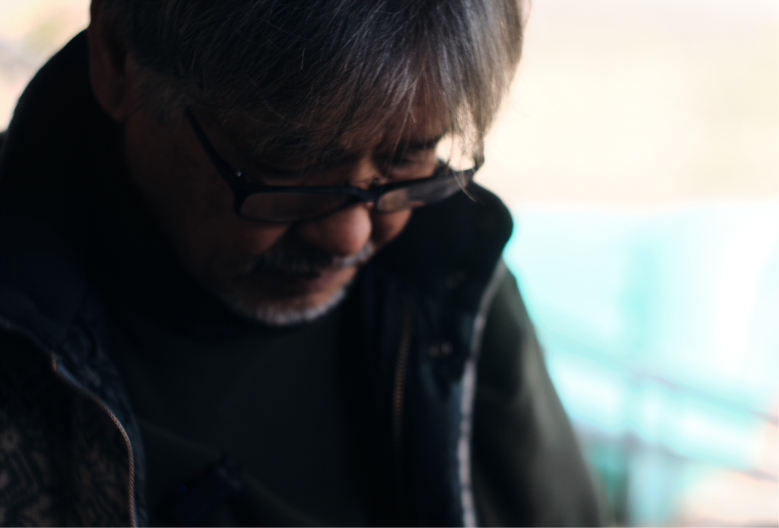
Takushi Takahara

Takushi Takahara is an artist who engages deeply with clay and fire.
Even among fellow practitioners, he is often described simply as a man who truly loves clay.
In his daily life, he seeks out nature—chasing the fish in the river, gazing at the sea and sky, tending charcoal fires. Each of these moments extends seamlessly into his practice, forming a continuous thread between living and making.
Within his forms, there lingers a vital presence—suggestive of mouths, of bodies, of organic undulations. His works seem to touch the threshold between the inert and the animate, where matter begins to breathe.
Takahara also finds value in pieces with no visible effect of kiln fire (yōhen). Within the absence of visible pattern, he perceives what cannot be seen. His gaze already resides beyond convention, and his way of confronting flame is equally singular.
He selects not only pine, but also thinned woods such as cypress, deliberately invoking flames that resist easy control. These fires are not subdued; they rise as if awaiting an encounter.
For Takahara, firing is an act of drawing forth the moment in which clay and flame meet. It is this encounter that he cherishes above all.
He does not merely look at clay—he lives alongside it.



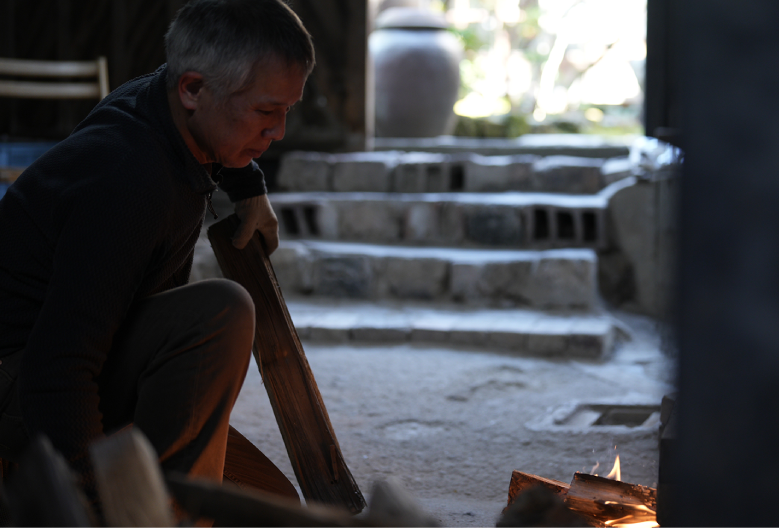
So ISEZAKI

As an artist within the lineage of the Isezaki family, he bears both the responsibility of inheriting tradition and that of giving rise to innovation.
Within this delicate balance, his forms emerge with a quiet strength—one that opens Bizen to the present without compromising its essential nature.
The refined clay passed down through the Isezaki lineage yields a clarity of texture and an inherent dignity. In engaging with this material, he repeatedly makes subtle and exacting decisions: whether to remove the stones from the raw clay, or to leave them intact.
Though contemporary in form, his work carries an irreplaceable sense of refinement.
This quality arises not from technique alone, but from his position within the lineage—and from the spirit with which he approaches it.

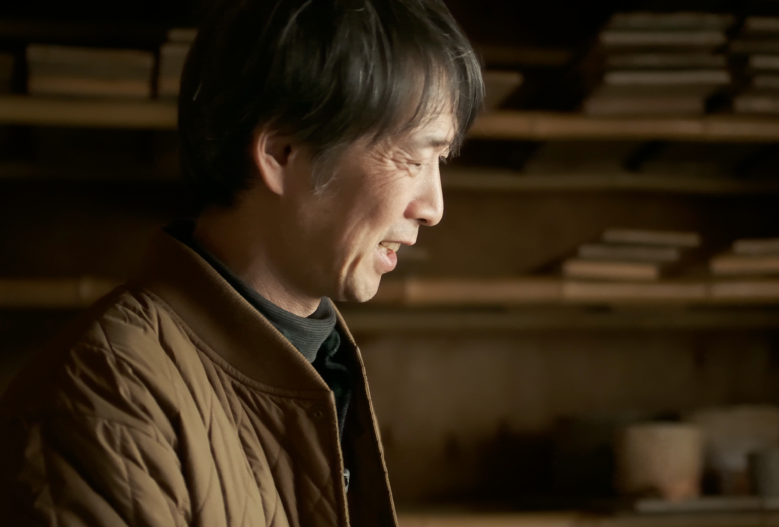
Hiroshi TOYOFUKU

Hiroshi Toyofuku is an artist who engages directly with the state of the clay itself.
Born in Tokyo and now based in Bizen, his work has already been recognized by collectors in Europe. He is among the few artists to inherit the technique of shizen nerikomi (natural marbling), while deepening it into a distinctly personal practice.
Natural clay is, by its very nature, uneven and heterogeneous. Where much of ceramics seeks to refine and homogenize the material before giving it form, Toyofuku resists this impulse, choosing instead to preserve the clay’s inherent irregularities and work with it as it is.
He does not crush, mix, or knead. Instead, he gently cuts into water-laden clay and quietly stacks it. This act is less one of shaping than of guiding form while allowing the clay to remain in its original state.
From this painstaking process—one that demands immense time—only a small number of works emerge.
In a quiet studio surrounded by fields, he continues, with few words, to face the clay.
He does not seek to make clay into something else, but to let it remain as clay.
In his work, beyond the reach of human intention, the strata and time of the earth itself come to the surface.

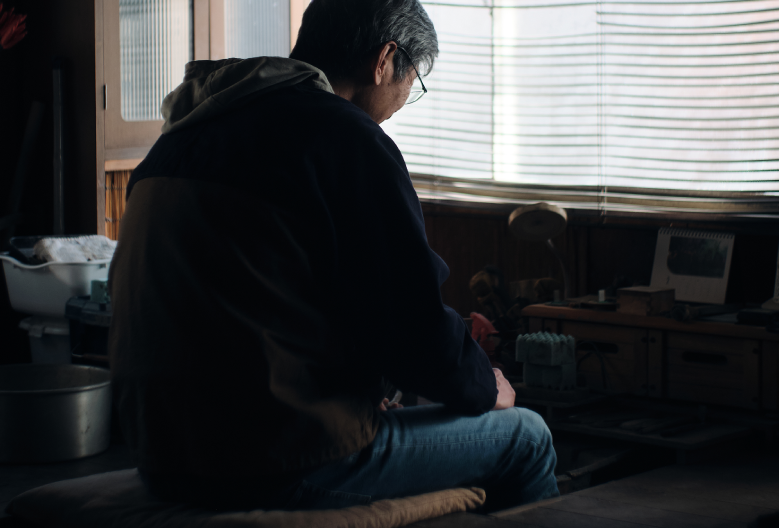
Toshihide OAE

Toshihide Oae is an artist belonging to the Oae family, one of the six historic lineages of Bizen-yaki.
Born into a house that, during the Edo period, supplied Bizen ceramics under the patronage of a feudal domain, he continues this legacy today through the use of the traditional climbing kiln, or noborigama.
His kiln is the result of accumulated, deliberate refinements—designed not only to fire artworks, but also to produce everyday wares with consistency and stability. To stabilize a wood-fired kiln is, in essence, to understand intimately the inherently unstable nature of flame.
Before entering the world of ceramics, Oae worked in the field of electronic manufacturing. Though grounded in a highly analytical mode of thinking, he returned to Bizen at a certain point in his life, stepping into the path of pottery. For him, this was less a decisive break than a quiet, natural return—an act of entrusting himself to a deeper current.
With his technical and theoretical acumen, he could have sought complete control. Yet, he chose otherwise. Within control itself resides that which cannot be fully contained—or, perhaps, that which, though controllable, is intentionally left unrestrained.
In this exhibition Mono-Solum, clearly structured compositions are gently unsettled by the seepage of flame and the traces of firing, introducing a subtle tension within their balance.
Even when fired under the same conditions, no two works reveal the same expression. Standing between control and non-control, Ōae accepts the flame—and, in doing so, guides it.

額縁
Master of the frame
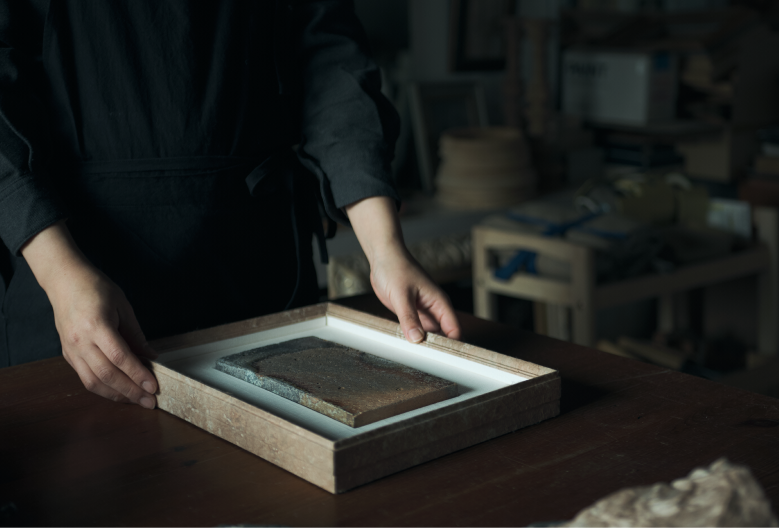
Mayo YOSHIDA
/kuroganeFrame

Born in Okayama, she began her career at a frame workshop before apprenticing under a master in Kurashiki, where she studied traditional techniques of gilding and carving.
In 2021, she began working independently, dedicating herself to creating custom, bespoke frames. Drawn to Italian frames of the 14th and 15th centuries, she traveled to Florence to study classical carving and framing techniques. Her works reinterpret these historical forms, treating the frame itself as an autonomous work of art.

the continue. Co.,Ltd.
Company dedicated to Reborn Bizen
“Rethinking everyday life from regenerated Bizen.“
the continue., Co. Ltd. positions reclaimed ceramics as the impetus for reconciling medium, memory, and moments. Our company reinterprets retired ceramic fragments excavated from the millennia-old soil of the Bizen region, restructuring them to conform to the current contemporary zeitgeist. We cherish nature and its bounty of artistic mediums, an affinity which informs our devotion to the Japanese aesthetic values that seek to illuminate the vestiges of history etched within those very same mediums. Our work gives shape to the storied expressions of the materials themselves which extend beyond the domain of traditional craft and design.
YUSUKE TAGUCHI
Context craft designer
Rooted in craft and material, weaving poetry into daily life.
Yusuke Taguchi is a product development designer whose work aims to capture and incorporate the intrinsic beauty of mediums and people via Japanese traditional artistry and collaboration with artisans, craftsmen, and authors both domestically and abroad. His close interaction with artisans allows for freedom of expression within the framework of “making” “conveying” and “selling,” leading to truly evocative pieces. Taguchi has exhibited his work at a variety of international design events like Milan Design Week and Masion&Objet where in recent years he has focused his energy on showcasing the practical potential of products in daily life, providing opportunities for consumers to both try out and purchase products, and also interact directly with the artisans that made them.
Biblioteca OSTINATA
Independent Cultural Library
“The founding of libraries was like constructing more public granaries, amassing reserves against a spiritual winter which by certain signs, in spite of myself, I see ahead”
Biblioteca OSTINATA is a private library open to the public, located in the Missori district in central Milan. Founded in 2022 for the purpose of sharing a massive personal collection of several thousand books, it serves as a cultural space where visitors can freely access works spanning literature, philosophy, history, poetry, and the social sciences. Interior designed by architect Michele De Lucchi combines wooden bookshelves with movable furnishings, creating a flexible environment that accommodates reading, lectures, exhibitions, and events. Guided by the belief that knowledge is a public good to be shared, the library fosters cultural exchange and human connection through the act of reading.
— Typology / Format —
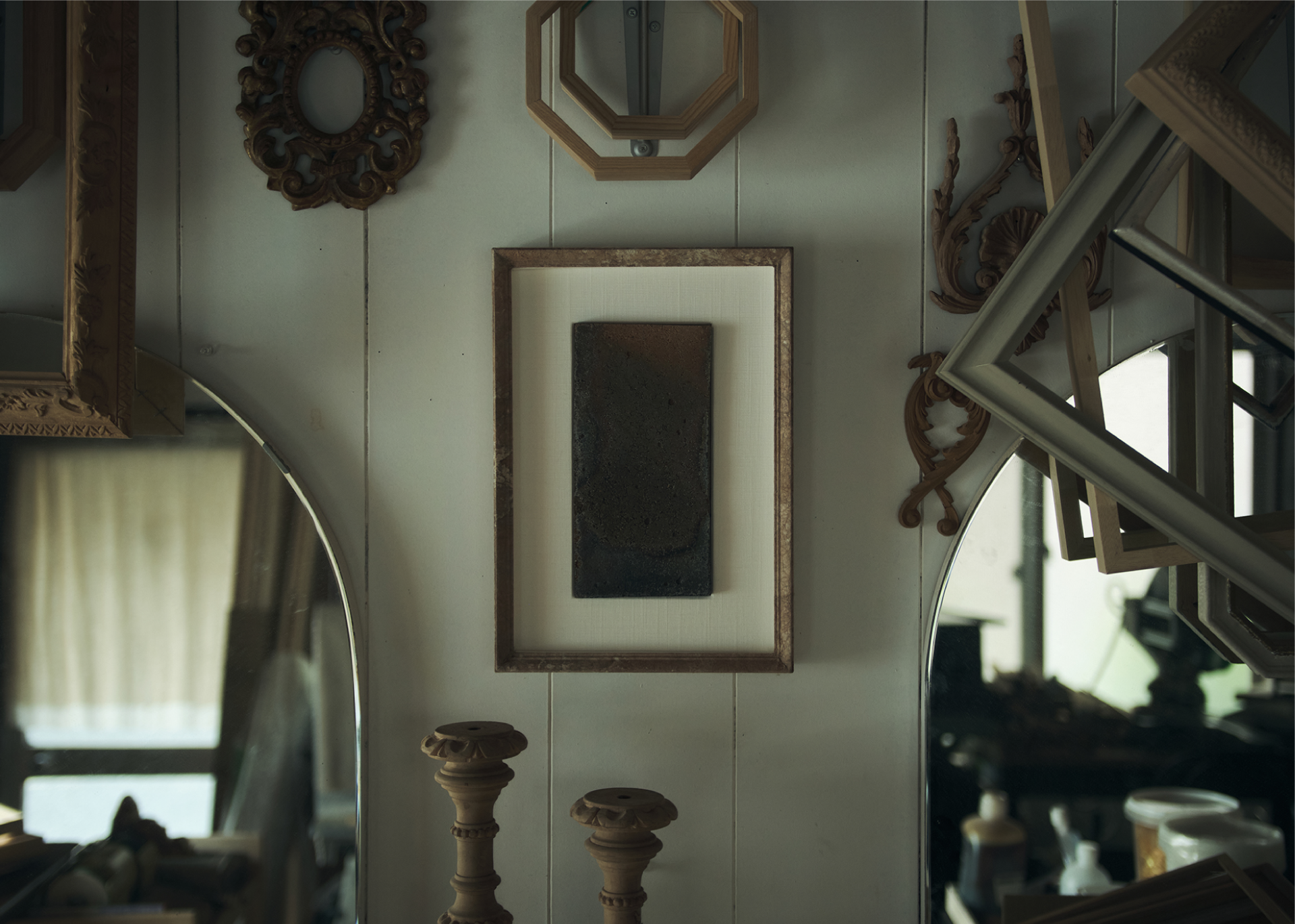
Works are produced in two sizes with frames handcrafted by a frame artisan, finished with Japanese washi paper. With unique combinations of ceramic, frame, and washi paper, each piece is unlike any other.

MONO-SOLUM_01
W240 H340 D40mm

MONO-SOLUM_02
W240 H240 D40mm
Realizzato a mano da un artigiano delle cornici con una finitura in carta washi.
— Pottery seal —
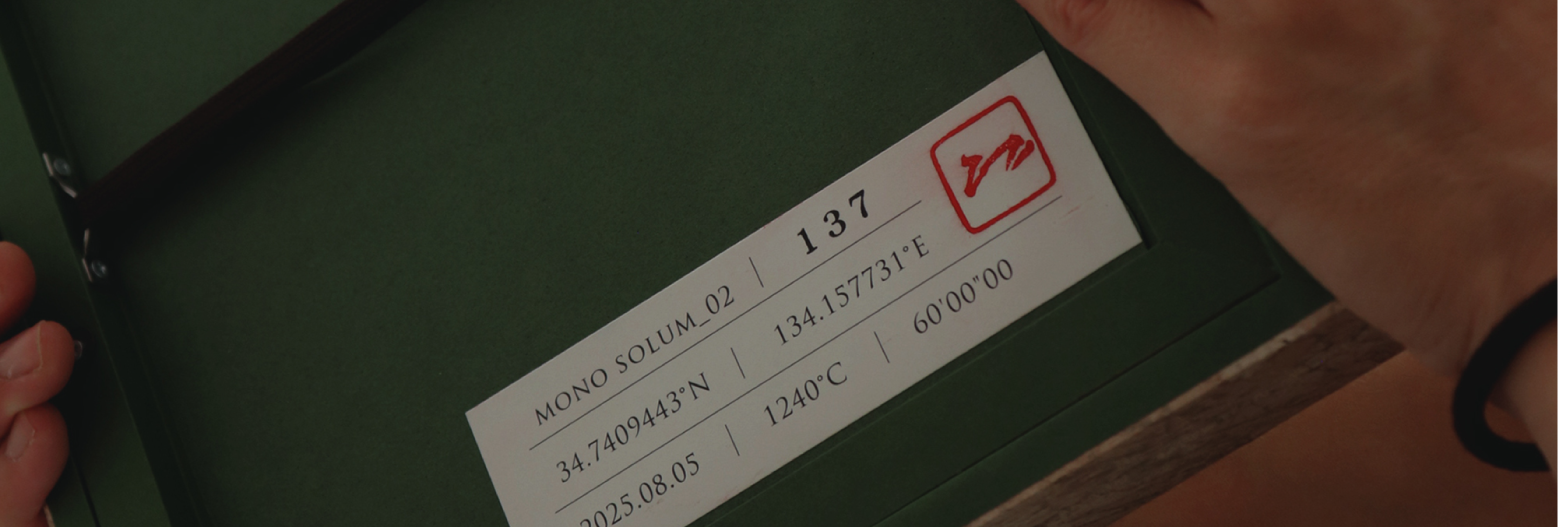
Since the Muromachi period, when the use of large communal kilns known as Ōgama started to gain popularity, Bizen-yaki artisans have inscribed personalized insignia on the reverse side of their pieces to identify their individual work.
— Serial number —
003 / mono_solum_01
Numero del pezzo Dimensioni
2025.07.20 / 1243°C / 62h
Temperatura/massima di cottura/Durata
Location: 34.8057N, 134.1568E
Luogo: punto di coordinate
Fired in limited numbers twice a year in a “climbing kiln,” each work is individually numbered—marking its singular place within the cycle of production.
備前焼
Bizen ware
Origins
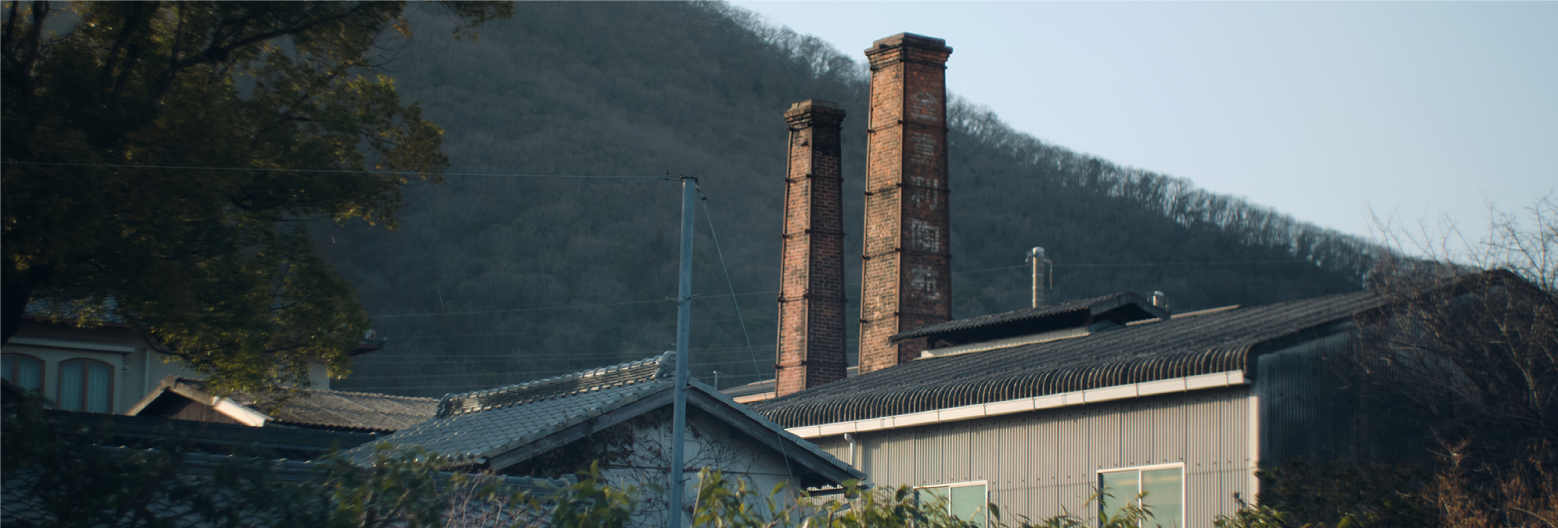
Bizen-yaki is one of Japan’s oldest ceramic traditions and is recognized as one of the Six Ancient Kilns (Nihon Rokkoyō), a Japan Heritage designation.
This technique, which relies solely on high-temperature firing without the use of glaze, has been passed down for over a thousand years and continues to this day.
Why does it forgo applied decoration and entrust itself entirely to the workings of nature?
This approach resonates deeply with the Japanese sensibility that embraces nature as it is and finds beauty within it.
History
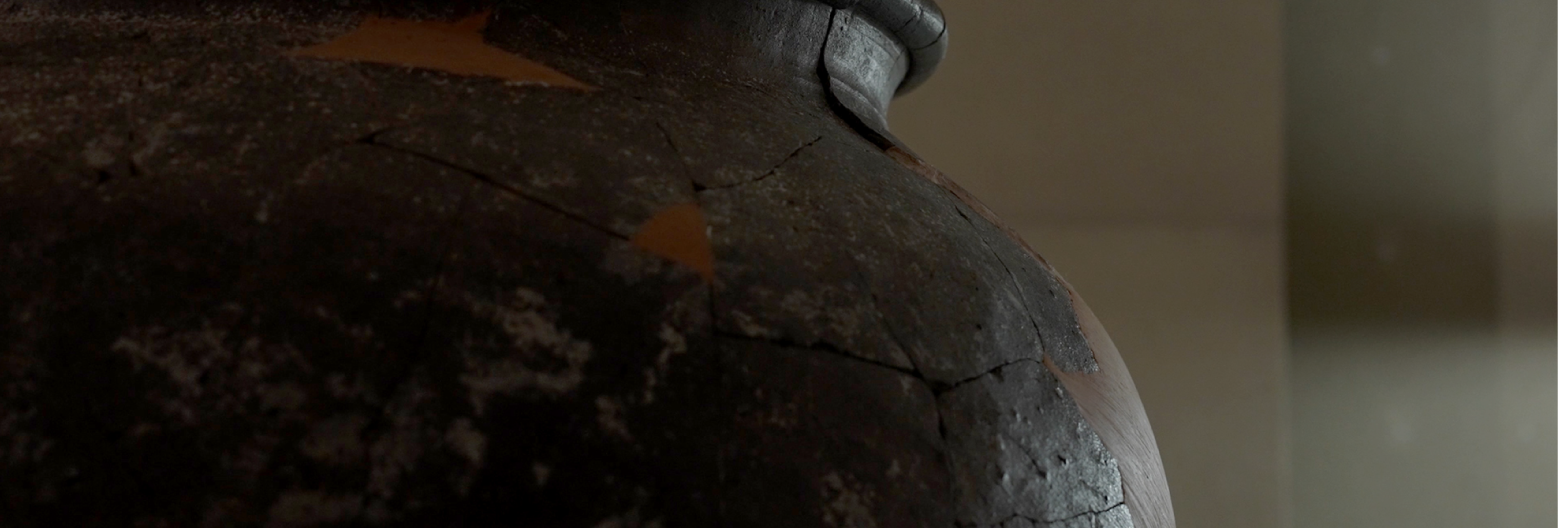
In Bizen, the region known for producing Bizen-yaki, firing is still carried out today using firewood in traditional climbing kilns.
During the firing process, molten ash from the wood creates natural patterns, while marks left by wrapped rice straw form distinctive hidasuki motifs—expressions that emerge beyond the realm of human intention.
Bizen-yaki has long embraced such fortuitous outcomes, cherishing them and finding beauty within them.
Formed from nothing more than clay and firewood, this pottery tradition has endured for over a thousand years, with kilns relocated in accordance with the availability of natural resources.
Rather than bending nature to human will, it adapts to nature, a sentiment prevelant to this day.

Characteristics and Beauty
The appeal of Bizen-yaki lies in the interplay between forms shaped by human hands, the distortions wrought by flame, and the kiln effects that emerge during the firing process.
Forms created on the wheel or by hand, and the natural expressions revealed through fire and ash—
these elements overlap to bring a single work into being.
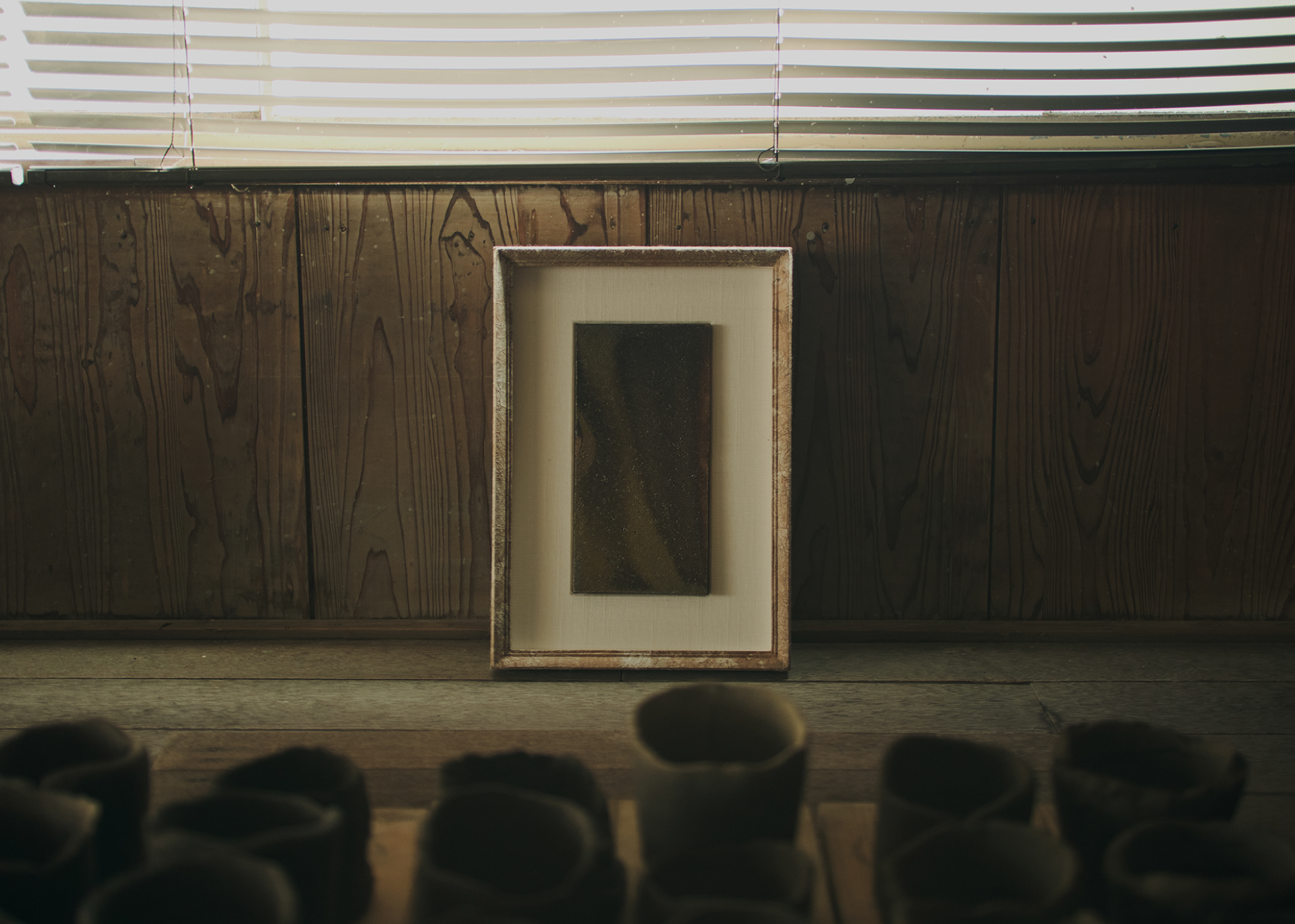
Only the kiln transformations are extracted and preserved within a frame in Mono-Solum.
Freed from the hand of the maker, the work invites a quiet contemplation of the fated expressions born of nature alone.